3 Nov 2026
Player Decision Trees in Multi-Currency Live Dealer Environments When Reward Tiers Reset Mid-Session Across Table Variants and Digital Wallet Options

Live dealer platforms now integrate multiple currencies alongside tiered reward structures that can reset at any point during active sessions, and players face layered choices that branch according to table type and wallet selection. Research from gaming technology providers shows these resets often occur after fixed time intervals or volume thresholds, which forces immediate reevaluation of ongoing strategies. Observers note that currency conversion rates update in real time, so a decision made at one table can shift value when carried to another variant.
Core Components of Decision Trees in These Settings
Decision trees in this context map out sequential choices starting with currency selection, then moving through table variant entry, and finally incorporating wallet transfer timing. Data from platform analytics indicates that mid-session resets alter bonus multipliers or cashback percentages, which in turn changes the expected value calculations at each branch. Those who track these patterns find that blackjack tables with side bets respond differently to resets than roulette wheels or baccarat layouts because payout structures and minimum stakes vary across games.
Table variants introduce additional nodes because some live environments support progressive side pots while others cap contributions at fixed amounts. When a tier resets, the system recalculates eligibility based on the new period, and players must decide whether to continue at the current table or migrate funds elsewhere before the next hand or spin begins. Evidence from operator logs reveals that migration frequency rises sharply in the minutes immediately following a reset notification.
How Mid-Session Resets Interact with Multi-Currency Flows
Multi-currency setups require constant monitoring of exchange rates that platforms pull from external feeds, and a reset can coincide with rate fluctuations that affect the real-time value of held balances. Researchers at institutions studying digital gaming economies have documented cases where players holding positions in two currencies experience uneven impacts when one currency's tier benefits expire while the other remains active. This creates branching points where conversion before or after the reset becomes a measurable variable in outcome modeling.
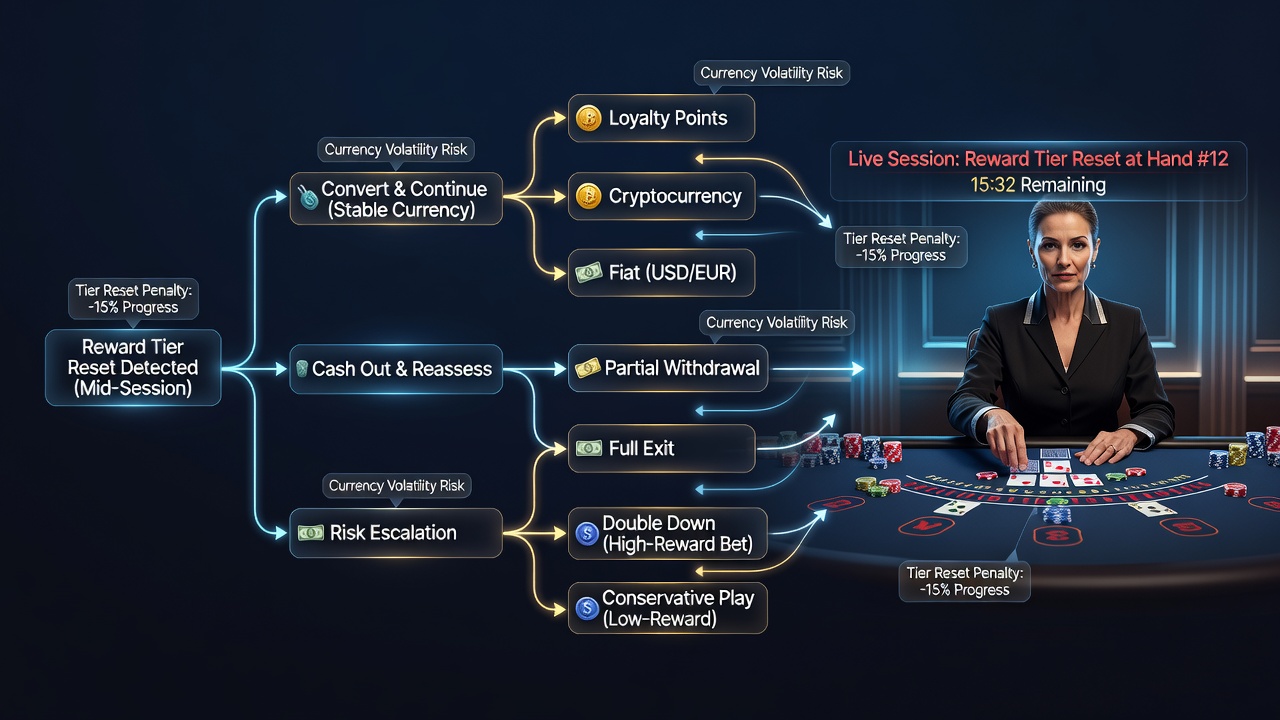
November 2026 saw several major platforms deploy synchronized reset clocks across currency pairs, which reduced the window for manual intervention and pushed more decisions into automated scripts or quick-select menus. According to figures released by the Canadian Gaming Association, cross-currency sessions increased by noticeable margins during that period as operators expanded support for regional digital assets alongside traditional fiat options.
Role of Digital Wallet Options in Shaping Branches
Digital wallets differ in settlement speed, fee structures, and supported currency pairs, which directly influences where players position funds before and after a tier reset. Faster wallets allow quicker movement between tables when a reset changes the optimal game selection, whereas slower options lock capital in place for longer intervals. Industry reports compiled by the European Gaming and Betting Association highlight that wallet choice correlates with session length because players using instant-settlement services adjust table variants more frequently than those relying on batch-processed transfers.
Some wallets integrate directly with loyalty ledgers so that tier progress carries across currencies without manual conversion steps, while others require separate tracking that adds nodes to the decision tree. Those monitoring platform behavior observe that wallet-linked resets sometimes trigger additional verification layers, which can pause play and alter timing strategies across different table speeds.
Practical Patterns Observed Across Variants
Blackjack and poker tables often feature shorter decision windows compared with slower roulette or sic bo rounds, so resets hit these faster games at moments when players have already committed to specific betting progressions. Data shows that players who maintain parallel sessions in multiple variants tend to consolidate positions into the table type that retains the highest post-reset multiplier. This consolidation step itself becomes another branch point influenced by wallet availability and currency pair liquidity.
Platform interfaces now display reset timers alongside wallet balance indicators, which allows real-time recalculation of expected returns without leaving the session. Observers tracking these interfaces report that visual cues reduce errors in timing but also accelerate decision speed, leading to higher volumes of mid-session table switches in the weeks following November 2026 updates.
Conclusion
Player decision trees in these environments continue to evolve as platforms refine reset mechanics, currency integrations, and wallet connectivity. The interactions among these elements create measurable branching paths that depend on timing, table characteristics, and transfer options rather than fixed strategies. Continued monitoring of operator data and regulatory filings from multiple jurisdictions will track how these systems develop through the end of 2026 and beyond.